We build with both WordPress and Django — and we're not religious about either. Here's how we decide which one fits your project.
Clients sometimes expect a developer to have one favourite tool and use it for everything. We deliberately work with two very different stacks — WordPress and Django / Wagtail — because they solve different problems well. Here's how we choose.
When WordPress is the right choice
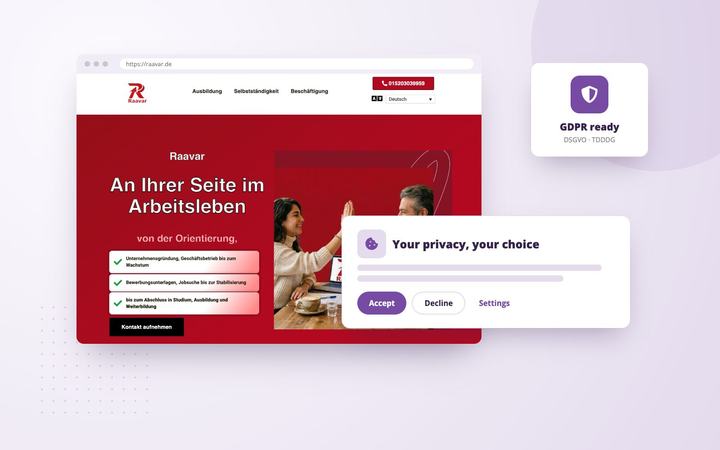
WordPress powers a huge share of the web for good reasons. With a page builder like Elementor, your team can create and rearrange pages visually, and there's a plugin for almost everything: forms, cookie consent, multilingual content, SEO.
- Marketing websites where the team wants to build new pages without a developer.
- Projects that need to launch quickly on a modest budget.
- Sites whose features are well covered by established, well-maintained plugins.
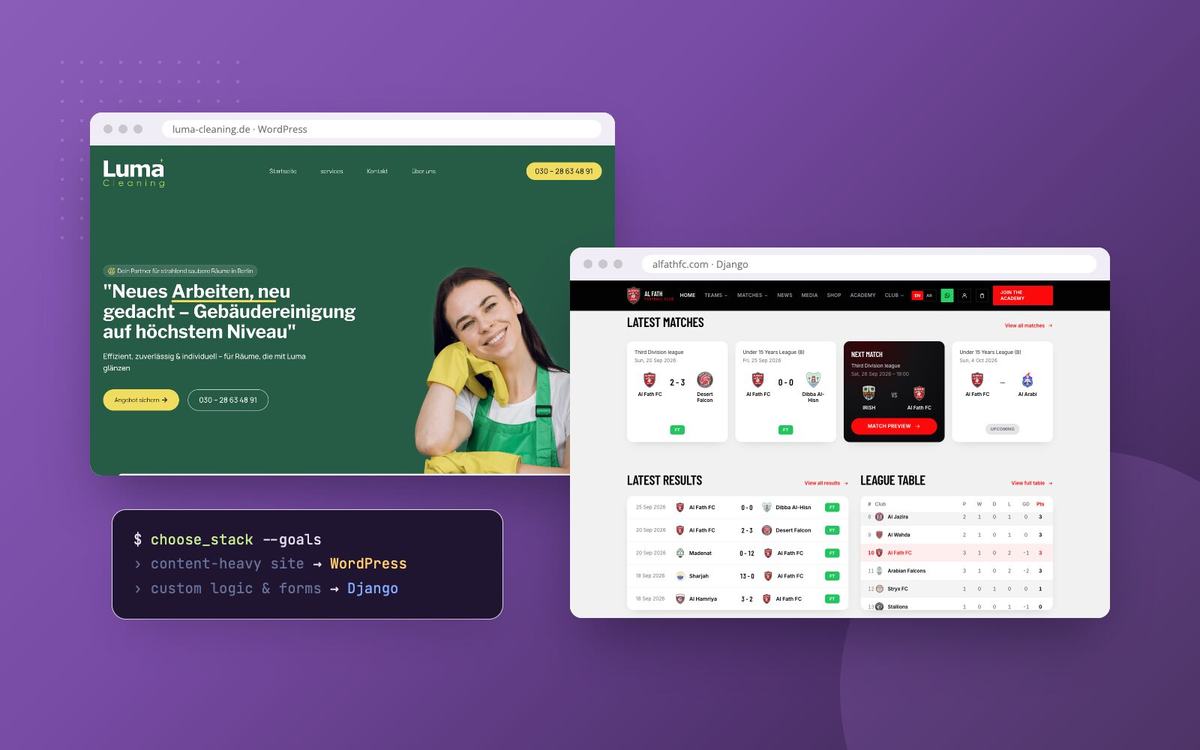
Sites like Luma Cleaning and Tarefe are good examples. The trade-off: every plugin is code you didn't write, so updates, security and performance need regular attention.
When a custom Django build pays off
Django is a Python web framework used by some of the largest sites in the world; Wagtail is a CMS built on top of it. With Django, we write exactly the features you need — nothing more.
- Custom workflows: registrations, bookings, calculators, dashboards, integrations with other systems.
- Multilingual sites with complex content that must stay structured and consistent.
- Projects where performance, security and long-term maintainability matter most.
The AL FATH FC club website is built this way — and so is the website you're reading right now.
Questions we ask before deciding
- Who will edit the site, and how often?
- Does the project need logic that off-the-shelf plugins can't handle well?
- How many languages, and how much structured content?
- What's the budget for the first launch — and for the next three years?
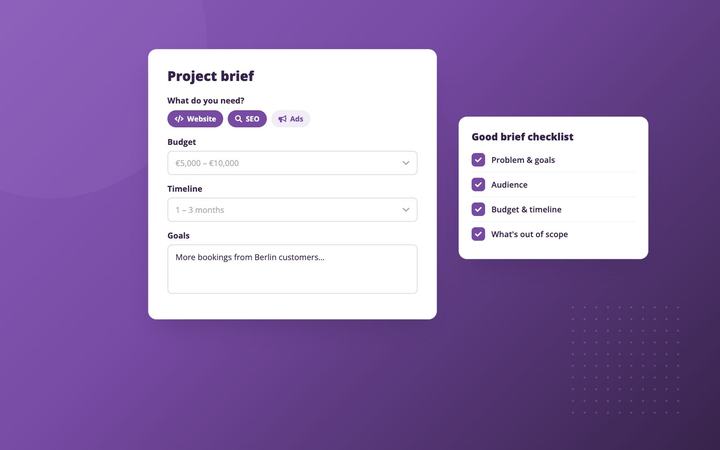
There's no universally better option, only a better fit. If you're unsure which one suits your project, that's exactly what our free discovery call is for — start with a brief.