Google catches people who are already searching; Meta helps people discover you. How we decide the split for our clients — with real examples.
It's the question we hear most often from new clients: “Should we advertise on Google or on Facebook and Instagram?” The honest answer is that they do very different jobs. Once you understand the difference, the budget split usually becomes obvious.
Google Ads: capture existing demand
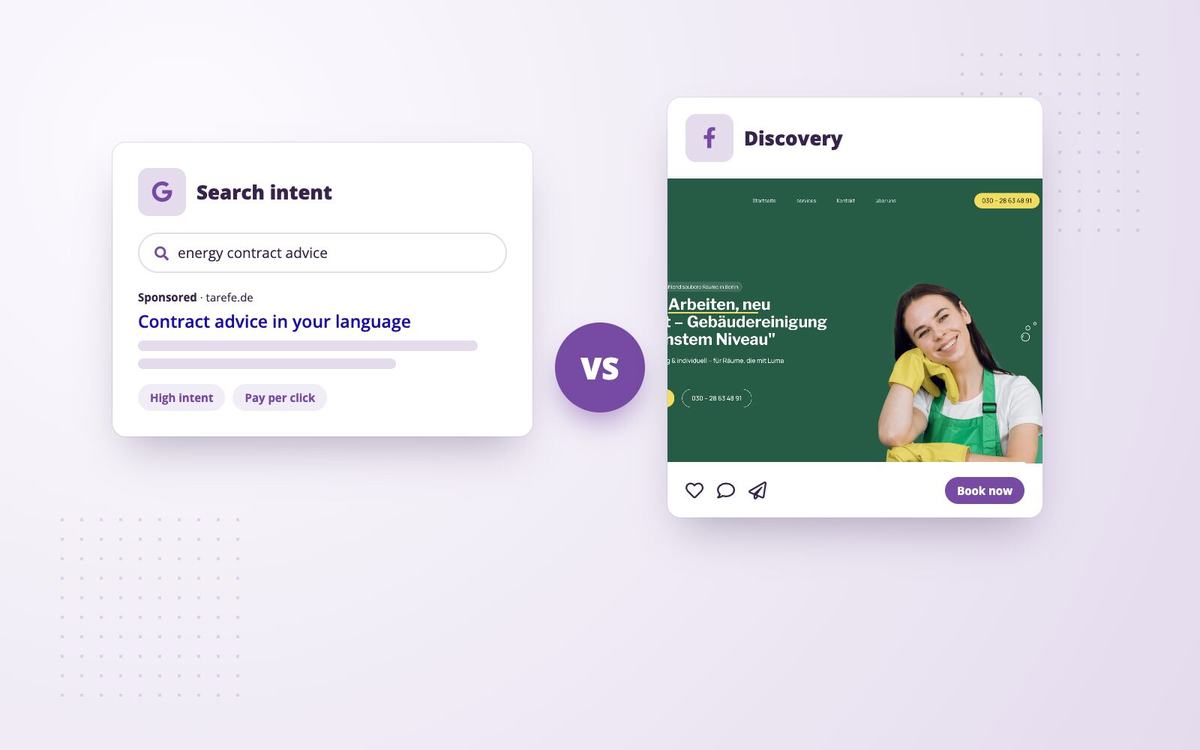
With Google search ads, you appear at the moment someone types what they need: “cleaning company Berlin”, “football academy Dubai”, “electricity contract advice”. These people already have a problem and are looking for a solution — the intent is high.
- Best for: services people actively search for, local businesses, urgent needs.
- Watch out for: competitive keywords can get expensive, and if nobody searches for your offer, there's nothing to capture.
Meta Ads: create new demand
On Facebook and Instagram, people aren't searching — they're scrolling. Meta's strength is targeting: you can reach parents in Dubai, Turkish speakers in North Rhine-Westphalia or small business owners in Berlin with a visual story they didn't know they wanted.
- Best for: visual products, new offers, events and registrations, reaching specific communities.
- Watch out for: creatives wear out quickly and need regular refreshing; clicks are cheaper but intent is lower.
How we decide in practice
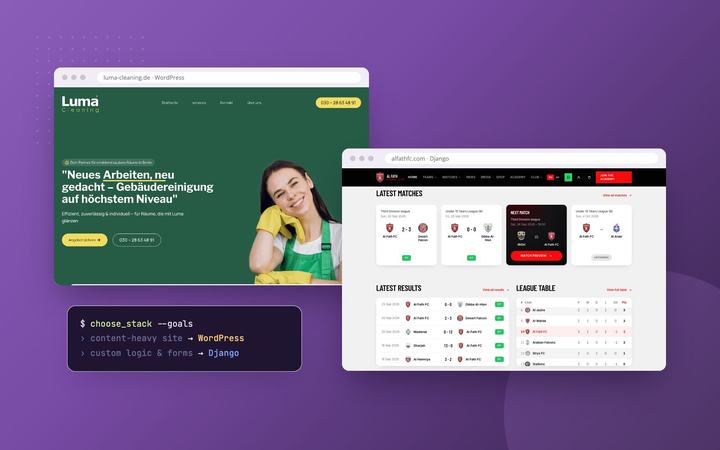
For Luma Cleaning, most customers start with a Google search, so the majority of the budget goes to search ads, with Meta used for seasonal offers. For the AL FATH FC academy, parents don't usually search for a specific programme — a great video on Instagram does far more, so Meta leads and Google supports during registration periods.
Whatever you choose, track conversions
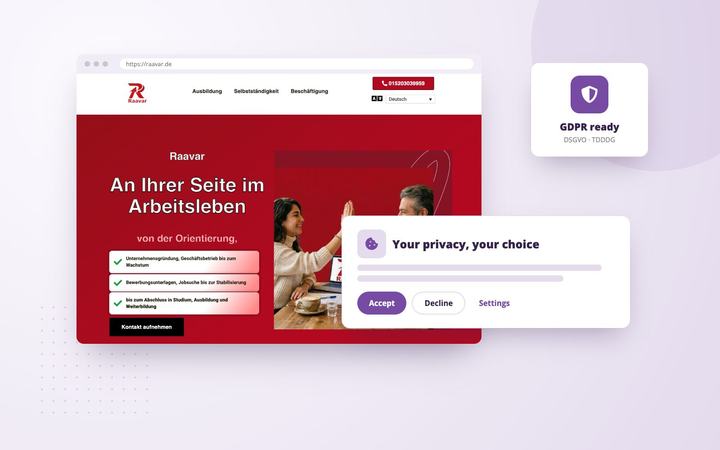
Clicks and impressions are not results. Before spending a single euro, set up conversion tracking for the things that matter — form submissions, calls, WhatsApp messages, bookings — so both platforms can optimise towards real customers. And in the EU, make sure that tracking respects your visitors' consent.
Our rule of thumb
If people already search for what you offer, start with Google. If you need to show people something new, start with Meta. Then test, measure and move budget to whatever brings in customers at the lowest cost. If you'd like a second opinion on your current campaigns, get in touch.